
The Grey Ghost
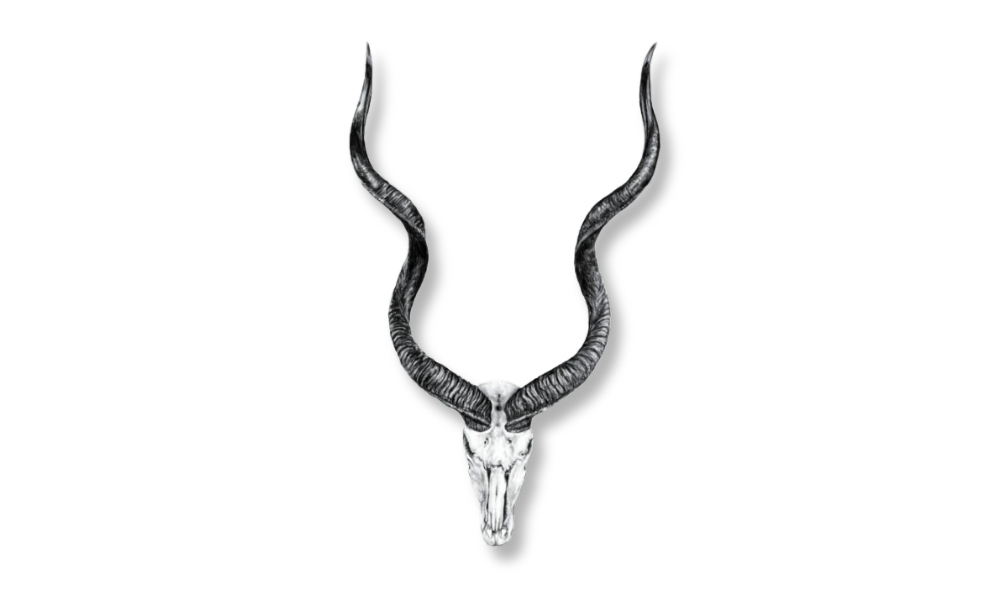
The kudu is known as the Grey Ghost for good reason—wary, intelligent, and incredibly difficult to hunt. A bull reaching this size has lived many years, evading predators and hunters alike, and has already contributed to the gene pool. Ethical hunting of such mature individuals places minimal pressure on population growth while supporting conservation through funding and land preservation. Honouring these bulls is about more than horn length—it is about recognising age, experience, and the challenge they represent in the wild.
This category celebrates one of Africa’s most iconic and elusive antelope. To qualify, a kudu must measure a minimum of 60 inches on the longest horn, with 60 inches set as the entry threshold. Only free-range kudu will be accepted. Each animal must be measured and verified by a professional hunter who is already a member of the Big Old Bulls Club, and a photograph must be submitted for review. Any kudu judged by our panel of experts to be immature will not be accepted, ensuring that only fully mature, exceptional animals qualify.
The Rowland Ward kudu horn measurement method is a standardized way of measuring spiral horns (like those of a kudu) for inclusion in the Rowland Ward Records of Big Game.
Kudu Measurement (Rowland Ward)
- The measurement is taken along the outside curve of the horn, not straight-line length.
- You use a flexible tape (like a tailor’s tape).
- Start at the base of the horn (where it meets the skull).
- Follow the center of the outer curve, staying on the ridge as it spirals upward.
- Continue all the way to the tip of the horn.
Key rules
- The tape must follow the full spiral, not cut across turns.
- You measure each horn separately.
- The final trophy score is usually the length of the longer horn (not an average).
- Measurements are recorded in inches and eighths (1/8”).
Common mistakes
- Don’t measure the inside curve.
- Don’t stretch the tape straight between points.
- Don’t include broken tips or reconstructed sections.